
When Diesel Supply Breaks Down, Two Types of Operators Emerge
The 2026 diesel disruption did not hit all industrial operators equally. Those who absorbed the full weight of the market had one thing in common: they were still buying fuel from a chain they did not control. The ones who were not had made a different decision long before the crisis arrived.

Ecuador Is Selling Crude and Buying Fuel Oil for Emergency Power.
Ecuador is exporting crude at prices well above budget while leasing floating power plants that burn imported fuel oil to keep the lights on. The gap between those two facts points to an opportunity that current infrastructure was never built to capture.

The Real Cost of Running Industrial Generators on Purchased Diesel
Diesel generators cost more than the fuel bill shows. When logistics premiums, supply interruption risk, price volatility, and Scope 3 liability are included, the true cost is far higher. For operators with crude access, on-site processing changes the equation entirely.
As Western Refineries Close, Think Energy Is Ready to Supply Diesel to Industrial Operators
Western refineries are closing at an accelerating pace, and the new mega-facilities replacing them are being built in Asia to serve Asian demand. For industrial operators in emerging markets, that means a growing diesel supply gap that imported fuel can no longer reliably fill. Think Energy's modular crude oil processing technology is ready to step in.

Why Industrial Operators Need to Take Control of Their Diesel Supply Chain
Mining, cement, logistics, and maritime operators depend on diesel supply chains that are expensive, volatile, and vulnerable to global disruption. Modular crude oil processing delivers spec-compliant diesel and marine fuel on site in 90 to 120 days, eliminating supply chain risk and reducing Scope 3 CO2 emissions by up to 50%.
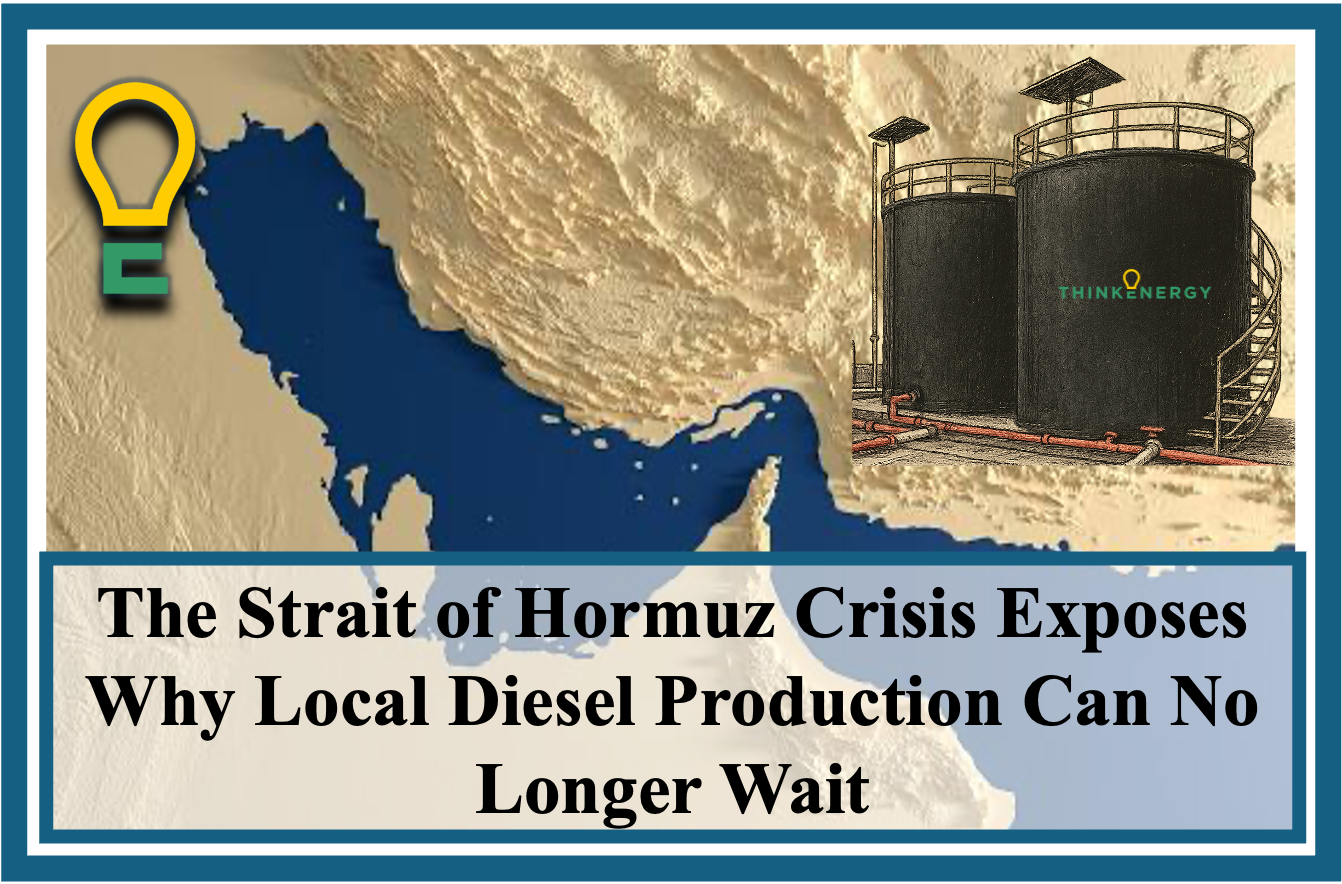
The Strait of Hormuz Crisis Exposes Why Local Diesel Production Can No Longer Wait
The Strait of Hormuz crisis has exposed what the energy industry has long avoided addressing: global diesel supply chains are structurally vulnerable. When crude stops moving through a single chokepoint, diesel availability collapses faster than markets can respond. Local modular crude oil processing offers the only reliable alternative.

How Modular Crude Oil Processing Is Changing the Economics of Remote Diesel Supply
Remote operations have long accepted high diesel costs and supply chain risk as unavoidable. Modular crude oil processing technology changes that equation, allowing operators to convert their own crude into specification-compliant diesel on site, in 90 to 120 days, at a fraction of conventional refining costs.